

Benefits & Advancements
Vacuum Chamber Architecture
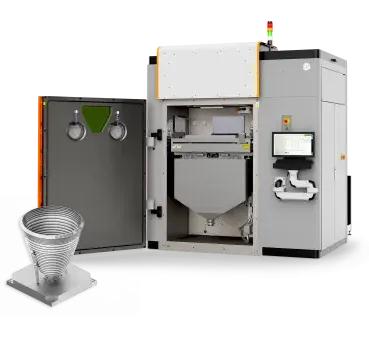
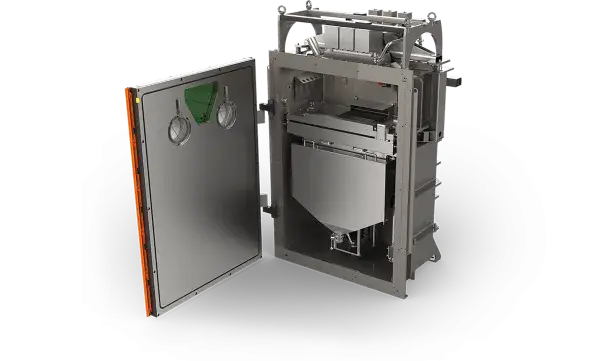
3D Systems has developed a unique vacuum chamber to improve process efficiency and part quality and reduce overall manufacturing costs in metal AM. In order to consistently achieve these benefits throughout the workflow from printing to material recycling.
Lower Total Cost of Ownership
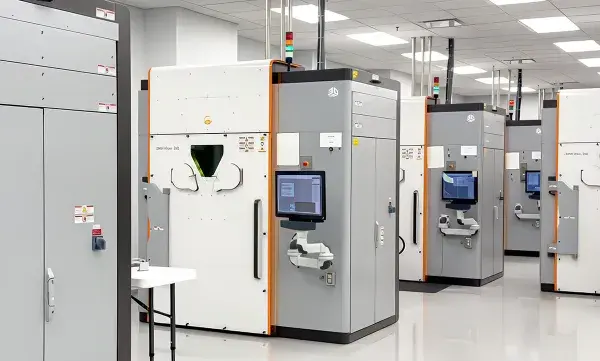
TCO and final per-part costs are important factors. The modularity of the DMP 350 solution allows manufacturers to define a factory setup that is tailored to their application and capacity requirements and maximizes the use of each module. This includes configuring an optimal workflow for machine operators with smooth integration of post-processing steps. The DMP 350 enables consistent-quality parts production and nearly eliminates waste and scrap, thereby optimizing part costs and TCO.
Superior Part Quality
Lorem ipsum dolor sit amet, consectetuer adipiscing elit, sed diam nonummy nibh euismod tincidunt ut laoreet dolore magna aliquam erat volutpat. Ut wisi enim ad minim veniam, quis nostrud exerci tation ullamcorper suscipit lobortis nisl ut aliquip ex ea commodo consequat. Duis autem vel eum iriure dolor in hendrerit in vulputate velit esse molestie consequat, vel illum dolore eu feugiat nulla facilisis at vero eros et accumsan et iusto odio dignissim qui blandit praesent luptatum zzril delenit augue duis dolore te feugait nulla facilisi.
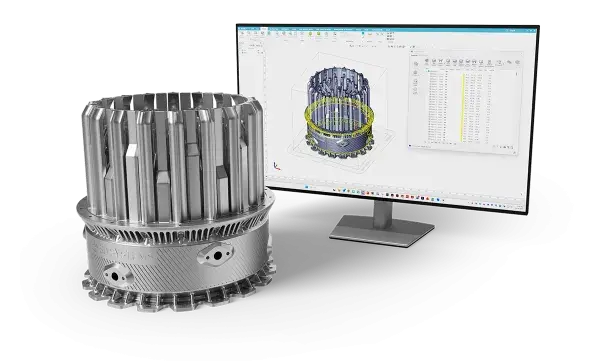
Powered by Premium 3DXpert™
Empowering the DMP350, 3DXpert™ is an integrated software handling the entire spectrum of the AM workflow. 3DXpert™ allows you to leverage the full potential of AM with complete control over the preparation and manufacturing process. Supporting every step of the AM workflow from design to post-processing, 3DXpert™ streamlines your process to quickly and efficiently transition from a 3D model to successfully printed parts.
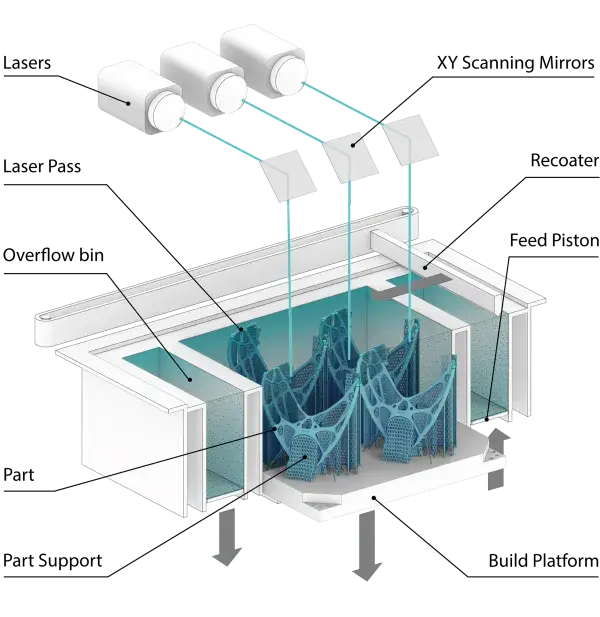
Metal Additive Manufacturing
Direct Metal Printing (DMP) was born of our pioneering laser-based additive technology from 1986. In 1989, our subsidiary DTM patented the first laser sintering (SLS) process and commercialized the first machine in 1992. This enabled metal-filled polymers to be directly printed rather than machined. In 2000, our subsidiary Phenix Systems was founded to commercialize Direct Metal Laser Sintering (DMLS) using a proprietary process. In 2008, our subsidiary Layerwise advanced the process with best-in-class vacuum technology and opened the door for DMP printers to directly build superior metal parts that are ready for use in the most demanding applications.
Main Applications
While direct metal printing can be useful to build parts for any industry, it is especially valuable in the following market segments.

Aerospace & Defense
Excels when parts need to endure the strain of Rocketry, Space Flight, Marine corrosion, Nuclear, Cryogenic, and more.

MedTech
From implantable orthopedic bone replacements, to dental prosthesis, to the collimators that make radiology possible - DMP is advancing medicine.

Semiconductor
Ideal for the custom parts needed by AI infrastructure, high-performance computing, wafer tables for chip manufacturing, heat exchangers, etc.

Turbomachinery
Specialized impellers, turbine blades, intricate internal valve geometries that traditional casting cannot achieve, parts for offshore petroleum and renewable energy.
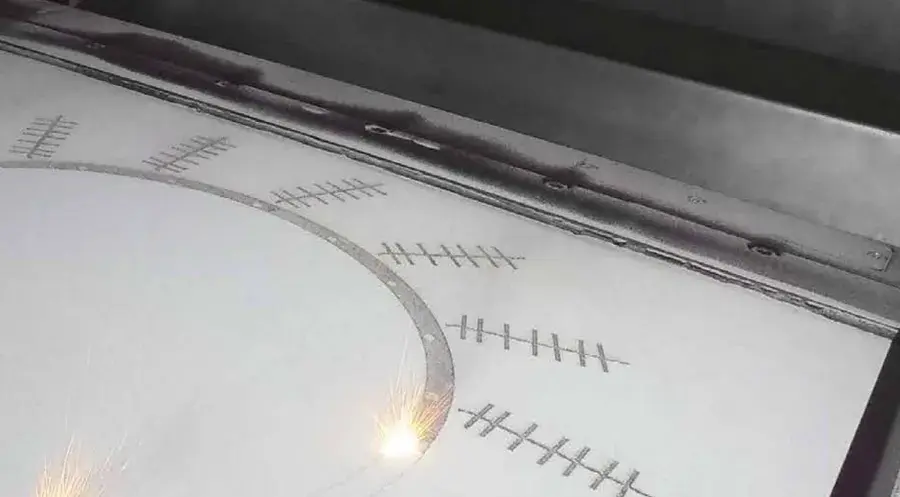
Distinct Advantages of DMP Flex 350 Over Competitors
Lowest Oxygen Content
Maximum Powder Usage
Minimum Argon Usage
Stable Print Process
Materials Compatible with this Printer:

A6061-RAM2 (A)
Melhor resistência, ductilidade e acabamento de superfície em comparação com AlSi10Mg

Aheadd® CP1
Liga de alumínio com excelente condutividade térmica

Certificação CuNi30 (A)
Resistente à corrosão com boa resistência e ductilidade

Certificação GRCop-42 (A)
Melhor resistência e resistência à corrosão e a altas temperaturas vs. cobre puro

LaserForm AlSi10Mg (A)
Boas propriedades mecânicas e boa condutividade térmica

LaserForm AlSi7Mg0.6 (A)
Leve, boas propriedades mecânicas e melhor condutividade térmica

LaserForm Ni625 (A)
Excelente resistência à corrosão, alta força e resistência ao calor

LaserForm Ni718 (A)
Resistente a oxidação, corrosão e temperaturas extremamente altas

LaserForm 17-4PH (A)
Excelente resistência a corrosão, alta resistência com boa rigidez

LaserForm 316L (A)
Pode ser esterilizado e é altamente resistente à corrosão.
Upcoming DMP Flex 350 series Events
Multiple Powder Management Workflows Supported
Some customers want the lowest hardware cost and opt for a more hands-on workflow. While some customers want the most hands-off workflow. Others will be focused on maximizing laser-on time to justify their ROI and increase machine productivity. We have options to support the workflow you require.

BCS Workflow
The BCS is the Build Changeover Station. A purpose built piece of hardware that uses an additional RPM to drastically cut hours between each build and minimum laser off-time.

TSR Closed Loop Workflow
The TSR module with Closed-Loop kit enables an inert atmosphere to be maintained during the powder removal and sieve process.

PMM Gravity Workflow
The PMM is the Powder Management Module, a shareable cleaning accessory that sieves and blends your recycled powder to maximize reusability.

Cyclone Arm Workflow
The PMM has an optional Cyclone Arm, enabling the hands-free reloading of sieved powder back into the printer.


Frequently Asked Questions
3D Systems DMP is Direct Metal Printing. We use pure metal alloy power and concentrated laser power to produce parts in an inert gas environment. It is a laser sintering (LS) process that some generically referred to as laser powder bed fusion (LPBF), or selective laser melting (SLM). DMP builds parts in an extremely low O2 PPM environment using the best-in-class vacuum chamber.
Other technologies of additive manufacturing like direct energy deposition (DED), electron beam melting (EBM) and plasma-arc produce parts that are similar – but those processes uses a magnetic beam rather than a laser, with differences which are more similar to welding meaning parts are generally less accurate. Their material options are limited to conductive metals, unlike DMP which enables the possibility nearly any metal alloy desired.
No. Binder jetting chemically adheres metal powder together. ‘Metal’ parts produced in this way will not have the purity or durability of our parts and are unlikely to be safely used in an application requiring functional strength or purity certification. Even when their parts are sintered post-build, they are relying on incinerating the binder/impurities and causing the actual metal to expand to fill the gaps. This results in deforming the geometry beyond its original shape and can leave trace residue in the part. While they may produce a ‘metal’ part – it is not the same as Direct Metal Printing.
3D Systems’ Direct Metal Printing produces solid metal parts that are functionally indistinguishable from cast or machined metal parts, DMP parts can be strong and light enough to be certified for space flight, strong enough for rocketry or cryogenic use, corrosion-resistant for marine or nuclear applications, suitable for in-body medical implantation, and nearly anything in between.
3D Systems is proud to have worked with hundreds of companies including NASA, JPL, Airbus, Boeing, Raytheon, SpaceX, Johnson & Johnson, Jabil, Wilting, Portsmouth Naval Shipyard, Mercedes, Cadillac, Tiffany, dozens of universities. We have provided products and/or services to hundreds of global and regional customers for commercial, educational, research purposes, and more. 3D Systems offers metals, plastics, haptics, consulting, hardware, materials, and services.